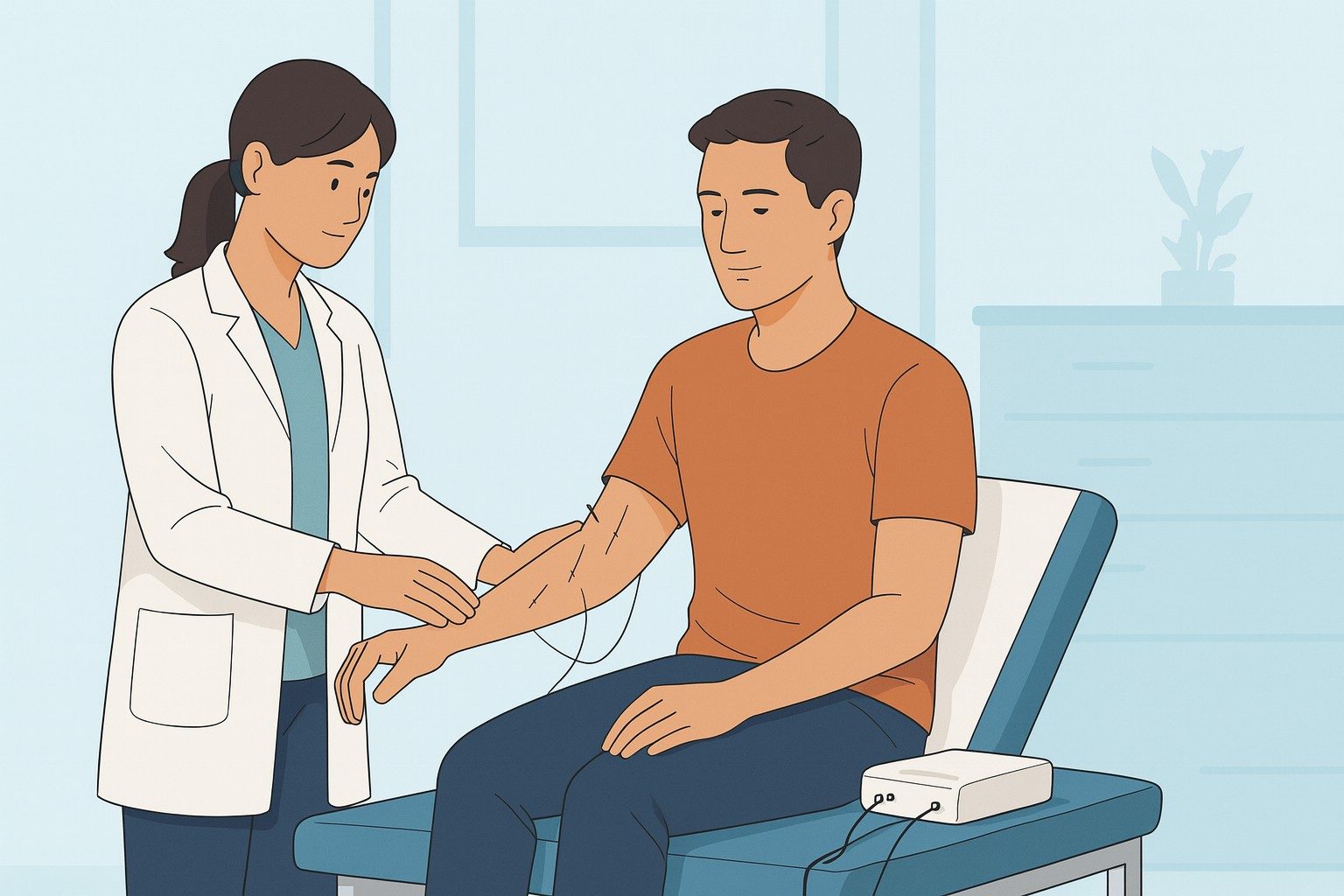
Can Acupuncture Help Stroke Survivors With Spasticity? A New Study Says Yes.
After a stroke, many people are left with stiff, tight muscles and difficulty moving one side of the body. This condition—called spastic hemiplegia—can make simple tasks like walking, dressing, or picking up objects extremely difficult. Medications and physical therapy are essential, but they don’t always provide full relief.
A recent scientific review suggests that acupuncture may offer meaningful help, especially when combined with rehabilitation.¹
What the Research Shows
Researchers analyzed 30 clinical studies involving stroke survivors. Some patients received only rehabilitation, while others received both rehabilitation and acupuncture. They measured changes in movement and overall quality of life.
Movement Improvements
Patients receiving acupuncture showed significantly better motor function, including:
- Hand movement
- Upper-limb mobility
- Lower-limb mobility
These functions were measured using standard neurological and rehabilitation tools.¹
Improved Quality of Life
Patients who received acupuncture also reported higher overall scores in daily living ability and well-being, compared with those receiving rehabilitation alone.²
How Might Acupuncture Help?
Spasticity occurs when brain injury causes abnormal muscle contraction and tightness. Scientists believe acupuncture may help by:
- improving local blood circulation
- reducing abnormal nerve activity
- relaxing tight muscles and easing stiffness
In Traditional Chinese Medicine (TCM), this condition resembles “internal wind” with obstruction of qi and blood after stroke. Acupuncture is used to restore circulation, soften rigidity, and calm the channels.
What Types of Acupuncture Were Used?
Although techniques differed, most studies used:
- Body acupuncture on arm and leg meridians
- Electro-acupuncture for muscle relaxation
- Scalp acupuncture stimulating motor-control areas of the brain
The key takeaway: **acupuncture was most effective when combined with physical rehabilitation.**³
Limitations to Keep in Mind
- Not all studies used identical procedures.
- Some studies showed stronger effects than others.
- Most research was conducted in Asia, where acupuncture is widely practiced.
Despite these differences, results still strongly favored acupuncture plus rehabilitation, especially for quality of life.²
What Does This Mean for Stroke Survivors?
For patients living with tightness, weakness, and limited mobility after a stroke, this research points to an encouraging message:
Adding acupuncture to rehabilitation may improve movement and help patients live better, more independent lives.
It is not a replacement for therapy or medication—but a promising partner.
Final Thoughts
Stroke recovery requires patience, but the evidence shows that acupuncture may give survivors a better chance of regaining mobility and comfort. Together with standard rehabilitation, it may help people move with less stiffness, perform daily tasks more easily, and live more fully.
Footnotes
¹ Su Y, Xiao M, Liu S, Ye M. Systematic review of acupuncture combined with rehabilitation for spastic hemiplegia motor function. American Journal of Translational Research. 2025;17(10):8187-8202. PMID: 41268255.
² Ibid., pooled statistical analysis for quality-of-life outcomes showed a standardized mean difference (SMD) of 0.84 (p < 0.0001).
³ Ibid., modality breakdown revealed most effective approaches involved body acupuncture + electro-stimulation or scalp stimulation paired with active rehab training.

Dr. Tan-Gatue is a Doctor of Medicine, Certified Medical Acupuncturist and a Certified Traditional Chinese Medicine Practitioner.
He is currently a Clinical Assistant Professor at the University of the Philippines College of Medicine, Section Head of the Section of Herbology at the Department of Traditional Chinese Medicine of the Chinese General Hospital and Medical Center in Manila, and a member of the National Certification Committee on Traditional Chinese Medicine under the Philippine Institute of Traditional and Alternative Health Care under the Department of Health. He was just recently appointed Associate Editor-in-Chief of the World Chinese Medicine Journal (Philippine Edition) and elected to the Board of Trustees of the Philippine Academy of Acupuncture, Inc.
He can be reached at email@acupuncture.ph
Discover more from Acupuncture Manila Clinic of Philip Tan-Gatue, MD, CMA, CTCMP
Subscribe to get the latest posts sent to your email.
No responses yet